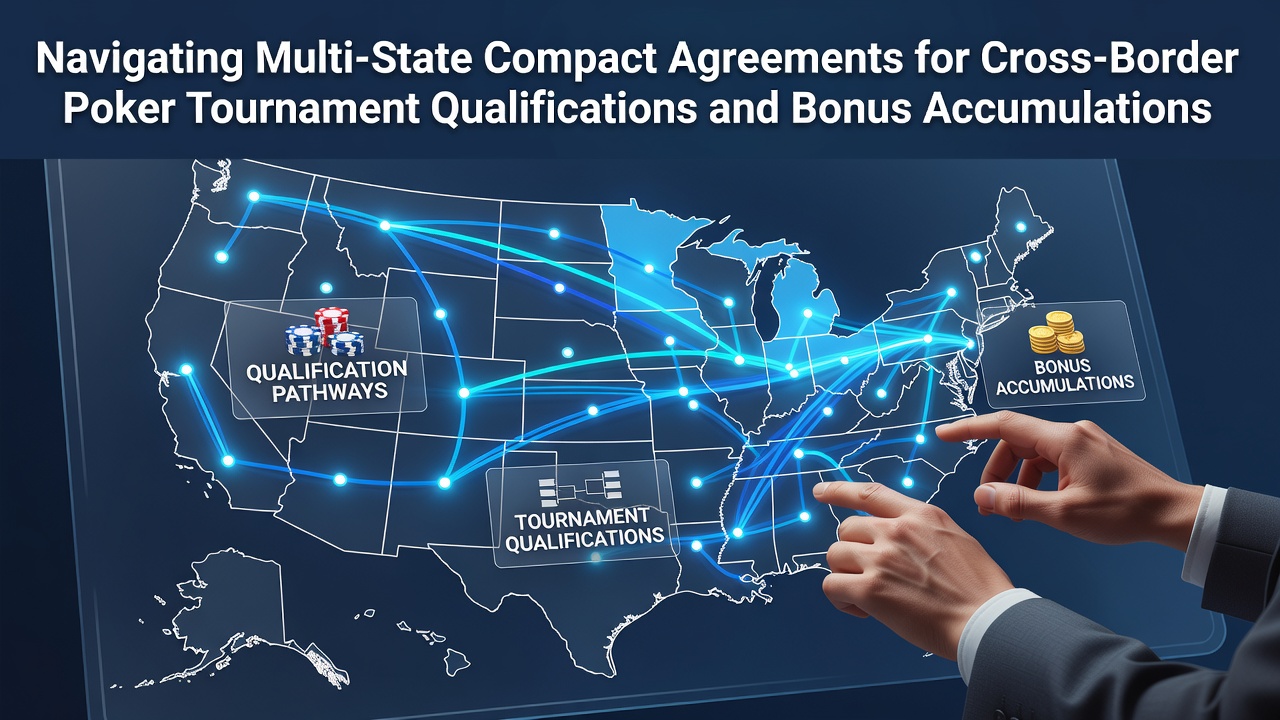
Navigating Multi-State Compact Agreements for Cross-Border Poker Tournament Qualifications and Bonus Accumulations
Multi-state compact agreements have emerged as key mechanisms for players seeking to qualify for poker tournaments that span several jurisdictions while accumulating bonuses tied to those events, and these frameworks rely on coordinated regulatory standards that address eligibility, prize pools, and promotional tracking across borders.
States enter these compacts to standardize rules on player registration, age verification, and tax reporting, which allows tournaments to draw participants from multiple regions without separate licensing hurdles for each venue. Data from the National Indian Gaming Commission shows that tribal-state agreements often form the foundation for such arrangements, particularly when events involve venues on sovereign lands that border non-tribal territories.
Core Elements of Multi-State Poker Compacts
Compacts typically outline shared databases for tracking player histories, ensuring that qualifications earned in one state count toward entry in another without duplication or conflict. Observers note that these databases integrate with centralized systems managed by gaming authorities in participating states, which reduces administrative overlap and maintains consistent enforcement of rules on bonus eligibility. In August 2026, several western states advanced discussions on expanding existing tribal compacts to include poker-specific provisions for cross-border qualifiers, building on earlier models used for lottery and sports wagering networks.
Bonus accumulations under these agreements depend on synchronized loyalty programs that credit points or rewards across venues, yet each compact specifies how promotional funds are allocated when players complete requirements in different locations. Researchers from the University of Nevada, Reno have documented that successful compacts incorporate real-time reporting protocols, which prevent double-dipping on bonuses while allowing seamless transfers of qualifying status.
Qualification Pathways Across Jurisdictions
Players navigate qualification by registering through a compact-approved platform that verifies residency and compliance with each state's minimum age and legal requirements. Those who've studied these systems find that satellite tournaments held in one state can feed directly into main events hosted elsewhere, provided the compact includes reciprocity clauses for entry fees and prize structures. Figures from the Nevada Gaming Control Board indicate that such pathways handled thousands of cross-border entries in recent cycles, with data showing steady growth in participation when agreements clarify tax withholding across state lines.
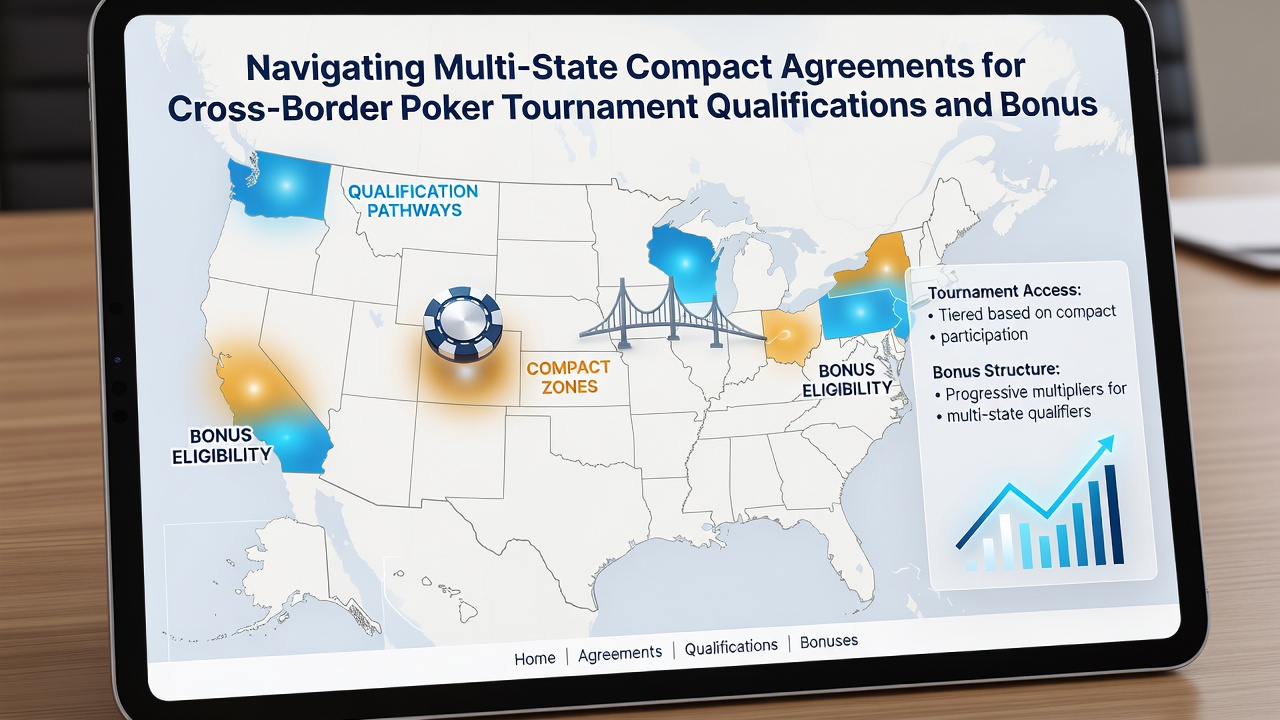
One notable case involves a 2025 pilot program between three midwestern states that allowed players to accumulate satellite points in any participating casino, then apply those points toward a regional championship. The arrangement required each state to align its bonus tracking software with a shared ledger, which minimized disputes over accumulation deadlines and payout schedules.
Bonus Tracking and Accumulation Rules
Bonus structures in multi-state compacts often use tiered systems where players earn layered rewards based on total tournament volume across jurisdictions, and these systems require precise synchronization to avoid expiration of credits when moving between venues. Industry reports from the Canadian Gaming Association highlight parallel approaches in provincial agreements, where cross-border play between certain Canadian regions and adjacent US states has tested integrated bonus models. Compacts address this by mandating standardized expiration windows and conversion rates for loyalty currencies tied to poker events.
Those monitoring regulatory updates point out that enforcement relies on periodic audits conducted jointly by the signatory states, which verify that bonus claims match actual play records stored in the compact's central database. In practice, this means a player completing a series of qualifiers in one state can carry forward progress toward a bonus pool hosted in another, provided all activity falls within the compact's defined calendar year.
Implementation Challenges and Regulatory Updates
Discrepancies in state tax codes remain a primary hurdle, since winnings from a compact event may trigger different withholding rates depending on the final host venue. Compacts mitigate this through unified withholding schedules that apply the most stringent state standard across all participants, thereby simplifying compliance for both players and operators. Recent negotiations in August 2026 focused on incorporating digital wallet integrations that automatically adjust for these variations while preserving audit trails.
Additional layers of complexity arise when compacts intersect with federal reporting requirements for large tournament prizes, which demands that all parties maintain compatible record-keeping formats. Gaming associations across North America have compiled case studies showing that well-structured agreements reduce processing delays by up to 40 percent compared with ad-hoc interstate arrangements.
Conclusion
Multi-state compact agreements continue to shape how players qualify for cross-border poker tournaments and manage bonus accumulations by establishing uniform standards for registration, tracking, and payout coordination. These frameworks depend on ongoing collaboration among state regulators, tribal authorities, and technology providers to maintain accurate shared systems. As more jurisdictions explore expansions in 2026 and beyond, the emphasis remains on clear documentation and joint oversight to support consistent participation across regional boundaries.