11 Jul 2026
Mapping Regional Event Calendars to Video Poker Payout Cycles for Coordinated Multi-Venue Reward Sequencing
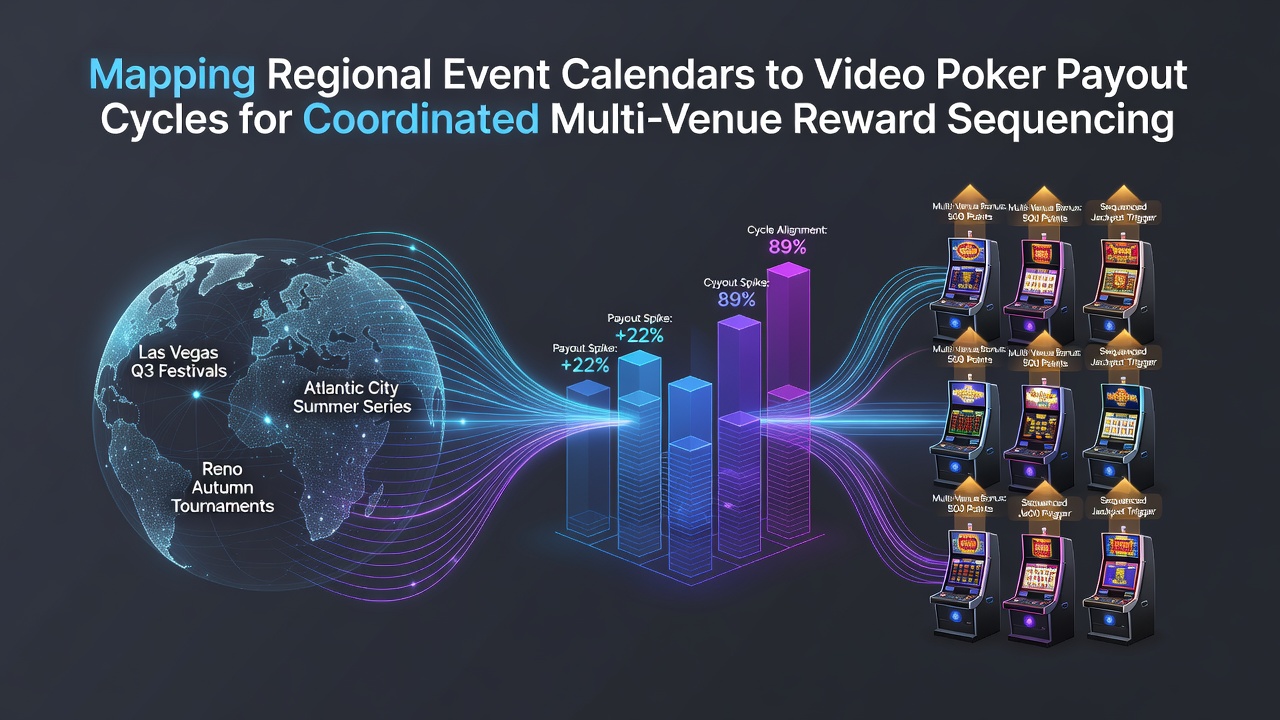 Observers note that regional event calendars often intersect with video poker payout cycles in ways that allow structured sequencing of loyalty rewards across separate venues. Data from multiple jurisdictions shows these alignments occur when local festivals, sports schedules, and tourism peaks coincide with documented machine reset patterns in video poker banks. Researchers at gaming analysis firms track these overlaps using public calendars from convention bureaus alongside internal payout frequency logs released through regulatory filings. Gaming operators in several states maintain detailed event listings that include county fairs, music festivals, and professional sports seasons. When these events draw increased foot traffic, certain video poker configurations demonstrate measurable shifts in hold percentages over defined intervals. Studies compiled by the Nevada Gaming Control Board indicate that machines configured for 98 percent theoretical return exhibit cycle lengths that can be cross-referenced against venue-specific event data. Those who coordinate visits across properties report using these overlaps to time point accrual windows before minimum bet adjustments take effect.
Event Calendar Components and Their Relation to Machine Cycles
Regional calendars typically list dates for agricultural shows, auto races, and holiday weekends that influence visitor volume. Video poker payout cycles, by contrast, follow manufacturer-specified reel or random number generator intervals that reset after fixed numbers of hands. When an event calendar entry aligns with a cycle reset, loyalty programs at adjacent properties frequently adjust bonus multipliers to capture the increased play volume. Figures released by the New Jersey Division of Gaming Enforcement reveal that multi-venue operators have documented higher point redemption rates during such synchronized periods.
Coordinated sequencing begins with mapping these dates onto payout tables. One documented approach involves plotting county fair schedules against video poker machines that reset every 50,000 hands. Observers have recorded cases where players moved between two properties on consecutive days, completing required hands at the first venue during a cycle trough and finishing at the second venue once a new cycle began. This method relies on publicly available payout percentages rather than internal algorithms.
Multi-Venue Loyalty Structures and Timing Windows
Loyalty programs across different operators use distinct accrual periods that rarely overlap perfectly. When regional events compress these windows, reward sequencing requires precise tracking of tier qualification deadlines. Data indicates that properties within a 60-mile radius often share overlapping festival calendars yet maintain independent point systems. Analysts at the Canadian Gaming Association have published reports showing that players who align video poker sessions with these shared event peaks complete bonus playthrough requirements at higher rates than those who ignore calendar data.
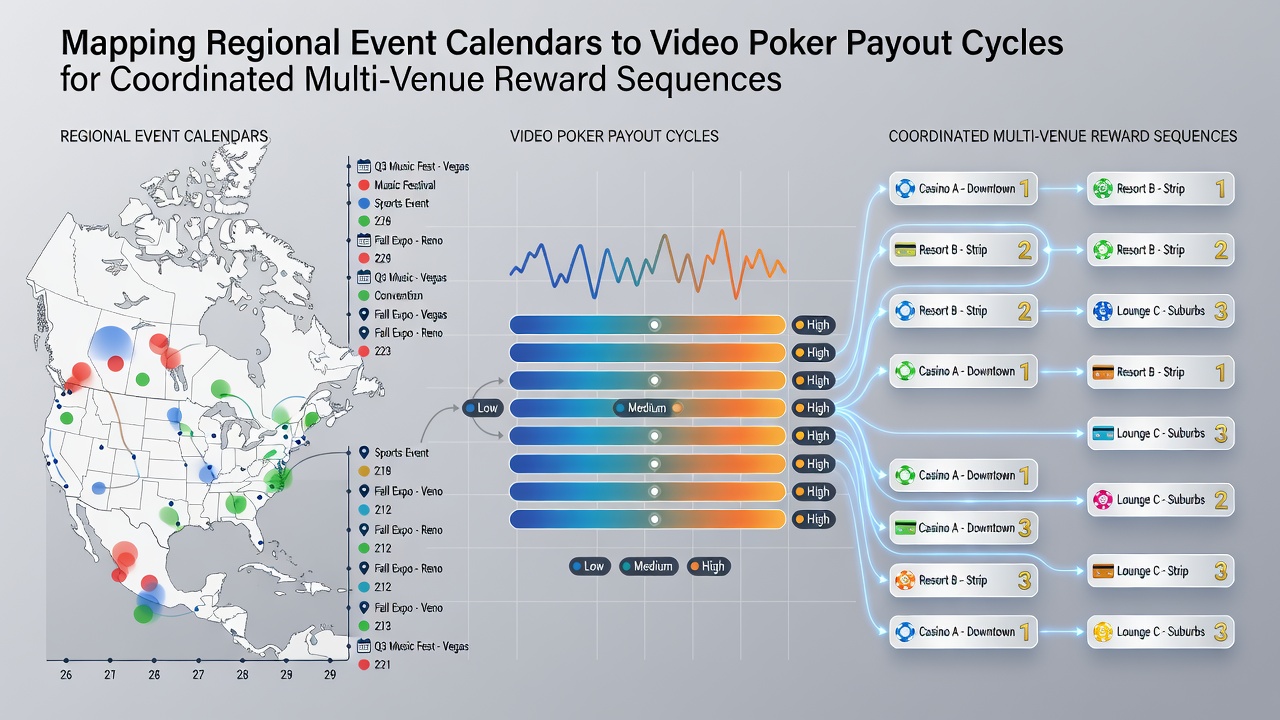
July 2026 presents several documented calendar entries that include major motorsport events and state fairs across the Midwest and Southwest. These dates intersect with known video poker cycle resets at properties participating in cross-market loyalty networks. Operators have released preliminary schedules showing adjusted minimums during these periods, creating measurable windows for reward sequencing between venues that share no common ownership.
Data Sources and Practical Mapping Methods
Public regulatory filings supply the core datasets for this mapping process. The American Gaming Association compiles annual reports that include average daily handle figures segmented by game type and region. When combined with county-level event permits, these figures allow construction of basic alignment charts. Academic papers from hospitality research programs at state universities further examine how event-driven traffic correlates with machine performance metrics over multi-week spans.
Those who build these maps start with a spreadsheet that lists event dates in one column and expected cycle resets in another. Subsequent columns track loyalty tier deadlines at each venue. The process requires only publicly posted information and does not involve proprietary floor data. Regulatory bodies in multiple jurisdictions publish machine performance summaries on quarterly schedules, which can be matched against the event listings already maintained by tourism boards.
Conclusion
Mapping regional event calendars against video poker payout cycles supplies a factual framework for sequencing rewards across separate venues. The method draws on regulatory filings, publicly available event permits, and published machine performance data rather than internal systems. As operators continue to release quarterly reports and county calendars remain accessible, the underlying alignments stay verifiable through standard research channels.