7 Jul 2026
Integrating Slot Cycle Monitoring with Poker Starting Hand Adjustments During Multi-Property Bonus Rollover Sequences
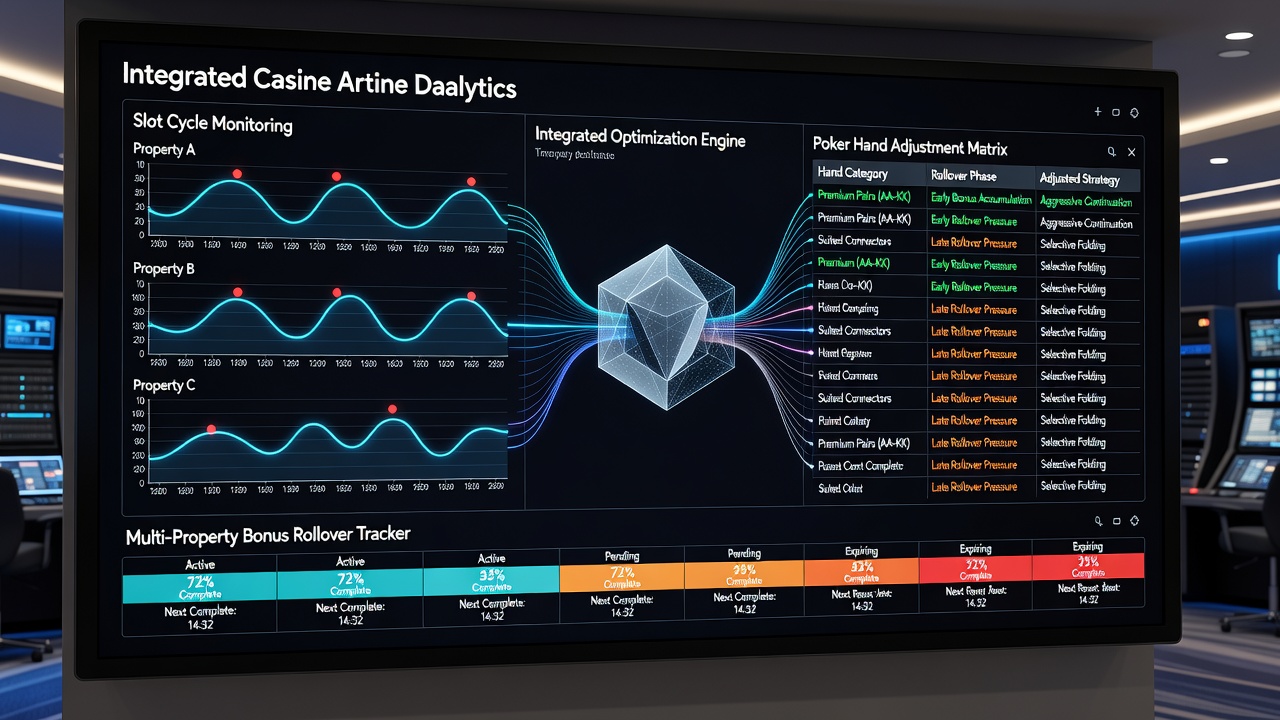
Players navigating multi-property bonus rollover sequences often coordinate slot cycle data with poker decisions to meet wagering requirements across several venues, and this approach draws from observed patterns in how random number generators align with promotional timelines. Research from regulatory bodies indicates that slot cycles, which represent sequences in RNG outputs, can inform timing for bonus fulfillment when properties share loyalty networks or promotional partnerships. Those who study these integrations note that adjustments to poker starting hands become relevant when rollover deadlines overlap between locations because certain hand selections may accelerate or stabilize playthrough rates without altering core game mathematics.
Slot Cycle Fundamentals in Bonus Contexts
Slot cycle monitoring involves tracking observable patterns in machine behavior over extended sessions, though each spin remains independent according to certified RNG standards enforced by state regulators. Data from the Nevada Gaming Control Board shows that bonus rollover sequences frequently span multiple properties in July 2026, where players must complete playthrough obligations within set windows that coincide with loyalty tier resets. Observers note connections between cycle positions and session pacing because some machines display near-miss frequencies that players log to estimate remaining rollover progress. This monitoring pairs with poker because starting hand charts can shift based on available time buffers at each property, allowing participants to select ranges that match the urgency of fulfilling combined requirements.
Linking Cycles to Hand Selection Criteria
Experts have observed that when a slot cycle indicates a potential payout cluster, players may tighten poker starting hands to preserve bankroll for subsequent properties in the sequence, while wider ranges apply during perceived quieter cycles to increase hand volume. Figures from industry reports reveal that multi-property rollovers in regional markets often require 10x to 30x wagering on bonuses, which creates pressure to optimize both slot spins and poker hands per minute. Those who've examined these sequences find that hand adjustments typically focus on suited connectors or small pairs when cycle data suggests extended play is needed, whereas premium holdings receive priority near deadline thresholds. This integration relies on real-time data feeds from property apps that display remaining rollover amounts across venues.
Multi-Property Sequence Management
Coordinating across properties demands awareness of varying minimum bet levels and game availability, since one venue might emphasize video poker variants while another focuses on live tables during the same rollover period. Studies compiled by the American Gaming Association highlight that players frequently move between properties in July 2026 to exploit staggered bonus windows, and slot cycle logs help predict when a machine pool might yield higher hit frequencies to offset slower poker tables elsewhere. Adjustments to starting hands occur because certain properties enforce stricter time limits on bonus usage, prompting tighter ranges early in sequences to build momentum. Data indicates that successful coordination often involves pre-mapping each location's game mix against expected cycle durations derived from historical payout reports.

What's notable is how loyalty accrual rates differ by property tier, which influences whether players expand or contract their poker ranges to hit point thresholds before bonus expiration. Reports from the New Jersey Division of Gaming Enforcement document increased cross-property promotions in recent years, where integrated monitoring tools allow real-time updates on cycle positions and remaining playthrough. Participants adjust hands accordingly because wider selections increase variance but accelerate volume toward rollover completion when slot cycles align favorably.
Practical Alignment Techniques
Techniques observed in practice include logging slot session timestamps alongside poker hand histories to identify correlations between machine states and optimal decision points during rollovers. Research indicates that players who synchronize these elements often review property-specific rules on bonus stacking before selecting starting hand charts that match projected session lengths. In July 2026, several regional operators expanded shared tracking platforms, enabling participants to monitor cycle progress while traveling between sites without losing momentum on active bonuses. This setup supports hand adjustments such as folding marginal holdings at one property to conserve chips for higher-value opportunities at the next location in sequence.
Additional factors include regional variations in game contribution percentages toward rollovers, which affect whether slot cycles or poker volume should take precedence at any given moment. Those monitoring these integrations report using spreadsheet templates that combine RNG pattern notes with hand range matrices tailored to each property's payout tables. The approach maintains compliance with house rules while optimizing the path through overlapping requirements.
Conclusion
Integration of slot cycle monitoring with poker starting hand adjustments during multi-property bonus rollover sequences represents a structured method for meeting complex wagering obligations across venues. Available data from regulatory sources and industry analyses continues to shape how participants approach these sequences, particularly as operators introduce new tracking tools in 2026. This factual framework relies on documented patterns rather than guarantees, and adherence to property-specific terms remains essential for all involved activities.