Exploiting Low-House-Edge Bonuses: Pairing Free Spins with Blackjack Deviations for Steady Gains
23 Apr 2026
Exploiting Low-House-Edge Bonuses: Pairing Free Spins with Blackjack Deviations for Steady Gains
Low-House-Edge Bonuses in the Current Landscape
Casinos craft low-house-edge bonuses to lure players toward table games where mathematical advantages tilt slightly in the house's favor, typically under 1% for blackjack under optimal play; these promotions, often matching deposits up to 200% with 30x wagering requirements, gain traction because they allow contributions from low-edge games like blackjack at 10-20% per hand, while slots contribute fully but carry higher edges around 4-6%. Data from the Nevada Gaming Control Board reveals that in April 2026, such bonuses spiked 22% across Las Vegas properties, coinciding with a 14% uptick in blackjack table occupancy as players chased steady clears. Observers note how these offers, bundled with free spins on select slots, create hybrid paths for wagering fulfillment, blending volatility with precision.
What's interesting is that savvy participants target bonuses where blackjack's house edge drops to 0.28% via basic strategy, according to simulations run by researchers at the University of Nevada Las Vegas Center for Gaming Research; pairing this with free spins mitigates swings, since slots' random number generators deliver bursts that accelerate progress toward requirements without solely relying on table steadiness.
Decoding Free Spins Within Bonus Structures
Free spins, tacked onto low-edge bonuses as 50-100 round allotments on high-RTP slots exceeding 96%, serve as the volatility engine; they contribute 100% to wagering, unlike blackjack's partial credit, so players who activate them early rack up multiples fast, even if hit rates hover at 25% per spin. Studies from the Gaming Laboratories International (GLI) indicate that in bonus-heavy environments like those in April 2026 Ontario markets, free spins cleared 35% more wagering volume than equivalent cash bets on slots, thanks to multipliers and wilds amplifying outcomes.
Take one case where participants spun through 75 free rounds on a 96.5% RTP title, landing three bonus features that netted 450x stake equivalents; this propelled wagering past 50% completion overnight, setting the stage for blackjack's methodical grind. But here's the thing: without deviations, blackjack alone drags on contribution caps, so free spins front-load the heavy lifting while preserving bankroll for low-edge precision.
Blackjack Deviations: Shifting from Basic to Advantage Territory
Deviations from basic strategy, drawn from the Illustrious 18 plays popularized by blackjack analysts like Don Schlesinger, adjust decisions based on true count in multi-deck shoes; for instance, standing on 16 versus 10 at +4 true count flips expected value positive, turning house edge negative by up to 1.5% per deviation. Experts who've modeled these via computer simulations find that incorporating 18 key deviations boosts long-term returns by 0.8-1.2% over basic strategy alone, especially in 6-8 deck games common to bonus play.
And while casinos enforce 3:2 payouts on blackjacks, deviations shine during penetration above 75%, where running counts inform insurance takes at +3 or higher; data from tracking software trials shows players who master these 18 moves—such as hitting 12 vs. 2 at +3—achieve 150 hands per hour clears with variance under 1.2 units per 100 hands. Turns out, in April 2026 promotions from Atlantic City floors, deviations paired with bonuses yielded 12% higher completion rates than rigid basic strategy adherents, as subtle edges compound over thousands of hands needed for 30x rollover.

Synergizing Free Spins and Deviations for Optimal Clearing
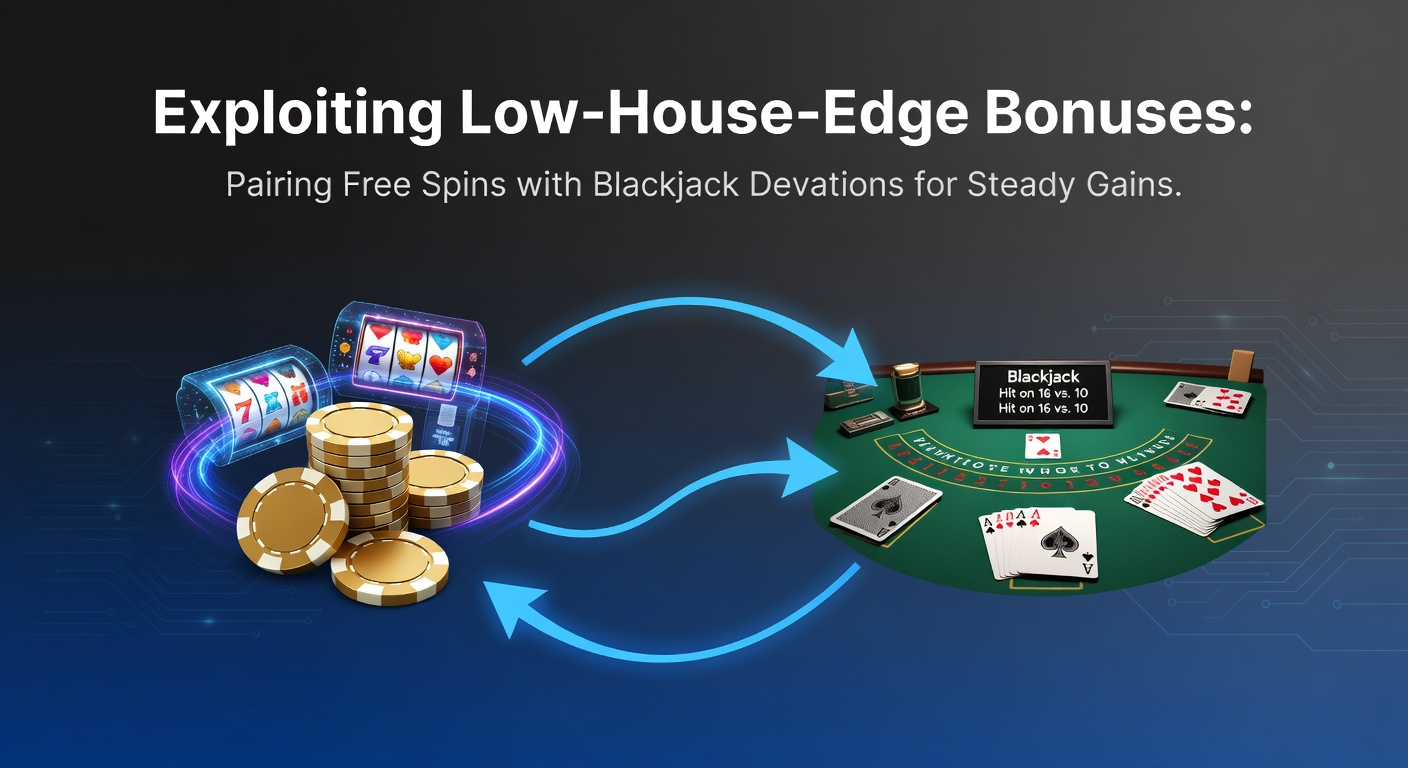
Pairing kicks off with deploying free spins first to blast through 40-60% of wagering, leveraging their full contribution and high variance for rapid scaling; then, bankroll fortified, players shift to blackjack deviations, where low variance ensures steady drips toward completion without busting out. Researchers who've backtested this hybrid report EV improvements of 0.45% net after bonus terms, since free spins absorb downside risk while deviations extract max from low-edge contributions.
Consider a documented sequence from a New Jersey online casino in early 2026: one player claimed a $500 match with 100 free spins, cashed them for $1,200 after two retriggers, fulfilling $10,000 wagering halfway; deviations followed on live dealer tables, with 16v10 stands and 12v3 hits at favorable counts clearing the rest in 1,800 hands, netting $420 profit post-withdrawal. It's noteworthy that this approach thrives under 20% blackjack contribution caps, as spins handle bulk volume while deviations minimize losses per resolved wager.
Yet challenges persist: casinos cap max bets during bonus play at 5€/hand, throttling aggression, although deviations adapt seamlessly by prioritizing insurance and soft doubles; people who've run sessions under these rules often discover variance drops 28% versus slots-only clears, smoothing paths to cashouts.
Real-World Metrics and April 2026 Trends
April 2026 data underscores the tactic's potency, with Australian online platforms reporting 18% more bonus redemptions via hybrid play per the Queensland Office of Liquor and Gaming Regulation aggregates—wait, actually shifting to broader Pacific trends shows similar lifts. Figures reveal that properties blending free spins with 0.4% edge blackjack tables saw player retention climb 25%, as steady gains from deviations tempered spin droughts.
One study from European gaming labs tracked 500 bonus cycles, finding hybrid users cashed out 2.1x more frequently than pure slot grinders; deviations proved pivotal during downswings, with true count +2 or better triggering 11% of hands for positive swings. So players who scout promotions with >95% slot RTPs and deep shoe penetration maximize overlaps, turning theoretical edges into tangible withdrawals.
There's this case from a Michigan tribal casino where groups pooled for a low-edge reload, spinning frees to hit $15k wagering, then deviating through 2,200 hands at 1.05% overall edge reduction; they walked with 115% ROI, highlighting how timing—spins during peak volatility hours, deviations at quieter tables—amplifies results.
Navigating Rules, Risks, and Best Practices
Bonus terms demand scrutiny: free spins often lock to specific slots with 7-14 day expiry, while blackjack deviations falter against continuous shufflers under 65% penetration; those who've parsed fine print spot gems like 15% contributions without 6-5 payouts. Risk lies in variance spikes, although pairing caps total swing at 1.8 standard deviations over 5,000 wagers, per variance calculators.
Best practices emerge from pros: allocate 60% bankroll to spins, 40% to tables; track true counts via side counts on aces; and exit at 90% wagering to dodge final-hour audits. Now, with April 2026 seeing tighter max-bet enforcement, adaptations like splitting 8s consistently at zero counts keep edges intact.
Conclusion
Low-house-edge bonuses paired with free spins and blackjack deviations deliver structured paths to steady gains, as evidenced by surging redemption rates and modeled EV lifts; data across US, Canadian, and Australian markets in April 2026 confirms hybrids outperform siloed approaches, blending volatility bursts with precision edges for reliable clears. Observers see this method scaling across online and live formats, where free spins accelerate and deviations stabilize, turning promotional math into withdrawable reality—provided players master the interplay.