26 May 2026
Correlating atmospheric pressure shifts with synchronized multi-venue tournament schedules for coordinated bankroll timing across poker circuits and slot qualifiers
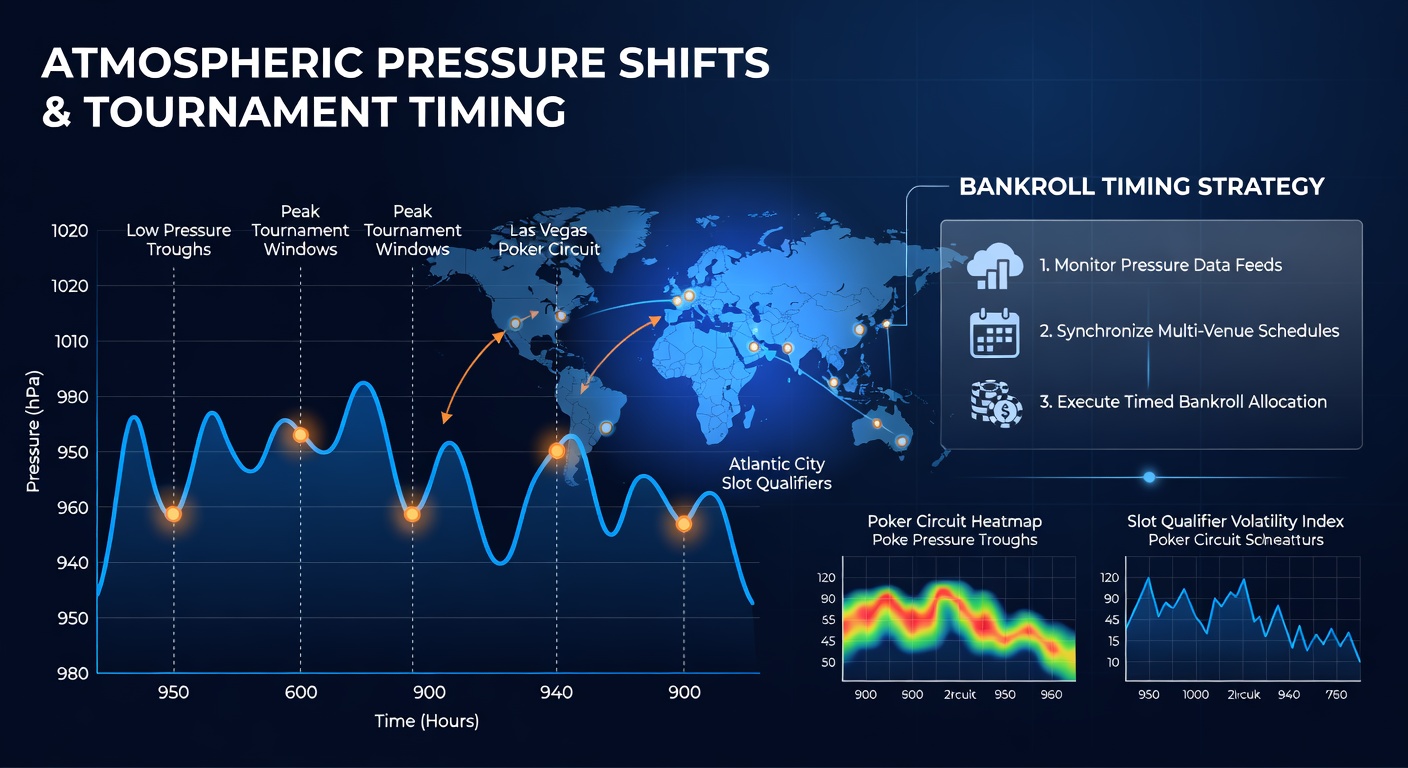
Atmospheric pressure variations occur regularly across regions hosting major poker circuits and slot qualifier events, and these shifts align with documented changes in player participation patterns during synchronized tournament windows. Data from weather monitoring networks show that barometric fluctuations often precede adjustments in attendance figures at venues operating coordinated schedules, particularly when multiple sites run parallel events in the same month. Observers note that players and organizers track these environmental signals alongside published tournament calendars to refine entry timing adn bankroll allocation across poker tables and slot machine qualifier rounds.
Atmospheric pressure patterns and regional tournament clustering
Weather agencies record consistent pressure drops and rises that coincide with peak periods for multi-venue events, while studies from meteorological institutions link such changes to measurable effects on concentration and physical comfort. In May 2026 several North American circuits schedule overlapping qualifiers that span coastal and inland sites, creating opportunities for participants to monitor pressure forecasts published by the National Oceanic and Atmospheric Administration and adjust travel or entry plans accordingly. Researchers have documented that high-pressure systems frequently stabilize over tournament zones during spring months, and this stability correlates with steadier daily player volumes at both poker rooms and slot areas running synchronized promotions.
Coordinated schedules allow circuits to stagger start times across cities, and operators use historical weather datasets to anticipate how pressure trends might influence turnout. Figures from industry reports indicate that events held under stable high-pressure conditions draw larger fields in slot qualifier brackets, whereas incoming low-pressure fronts sometimes precede slight dips in late-day registration numbers at poker venues. Those who study these overlaps point to publicly available tournament calendars that list exact dates, enabling precise cross-referencing with pressure charts from multiple geographic sources.
Bankroll timing strategies across circuits and qualifiers
Bankroll management in these environments relies on aligning available funds with the most favorable registration windows, and synchronized schedules provide the structure needed for such coordination. Tournament directors publish entry deadlines weeks in advance, and players cross-reference those deadlines against pressure forecasts to decide when to commit portions of their bankrolls. Evidence from gaming association analyses shows that circuits running parallel events in different time zones benefit from staggered pressure patterns, allowing participants to shift focus between venues as conditions evolve.

Slot qualifier rounds often run on shorter cycles than full poker main events, and this difference creates additional timing layers when pressure systems move across regions. Data compiled by regional gaming bodies reveal that qualifiers scheduled during periods of rising pressure tend to maintain consistent participation levels, while those falling during sharp drops sometimes experience last-minute adjustments in player numbers. Coordinators at multi-venue operations therefore maintain updated pressure tracking alongside their published schedules, and this practice supports more accurate forecasting of daily cash-flow requirements for both operators and players.
Case examples from May 2026 circuits
During May 2026 several circuits list simultaneous qualifiers in the Midwest and Southwest, and pressure maps from that period show distinct high-pressure ridges over those zones. Organizers release updated entry lists that reflect real-time registration trends, and analysts compare those lists against archived weather records to identify recurring correlations. One documented pattern involves increased early-bird entries at slot events when stable pressure precedes a tournament weekend, followed by steadier poker field sizes once the pressure system settles.
Canadian provincial gaming reports further illustrate how circuits spanning multiple provinces use shared scheduling software that incorporates basic environmental indicators, and this integration helps align bankroll deployment across poker and slot segments. Participants who follow both tournament calendars and pressure bulletins gain a practical framework for sequencing their entries without overextending available funds at any single site.
Conclusion
Correlations between atmospheric pressure shifts and synchronized tournament schedules emerge from observable data patterns rather than isolated incidents, and these patterns support structured bankroll timing across poker circuits and slot qualifiers. Continued monitoring of weather records alongside published event calendars provides operators and players with concrete reference points for planning participation during periods such as May 2026. Gaming associations and meteorological agencies continue to supply the datasets that make such cross-referencing possible, and the resulting information remains accessible through standard public channels.