21 Jul 2026
Balancing Complementary Game Pairings Across Regional Casino Networks to Maximize Daily Win Limits Under Varying Regulatory Frameworks
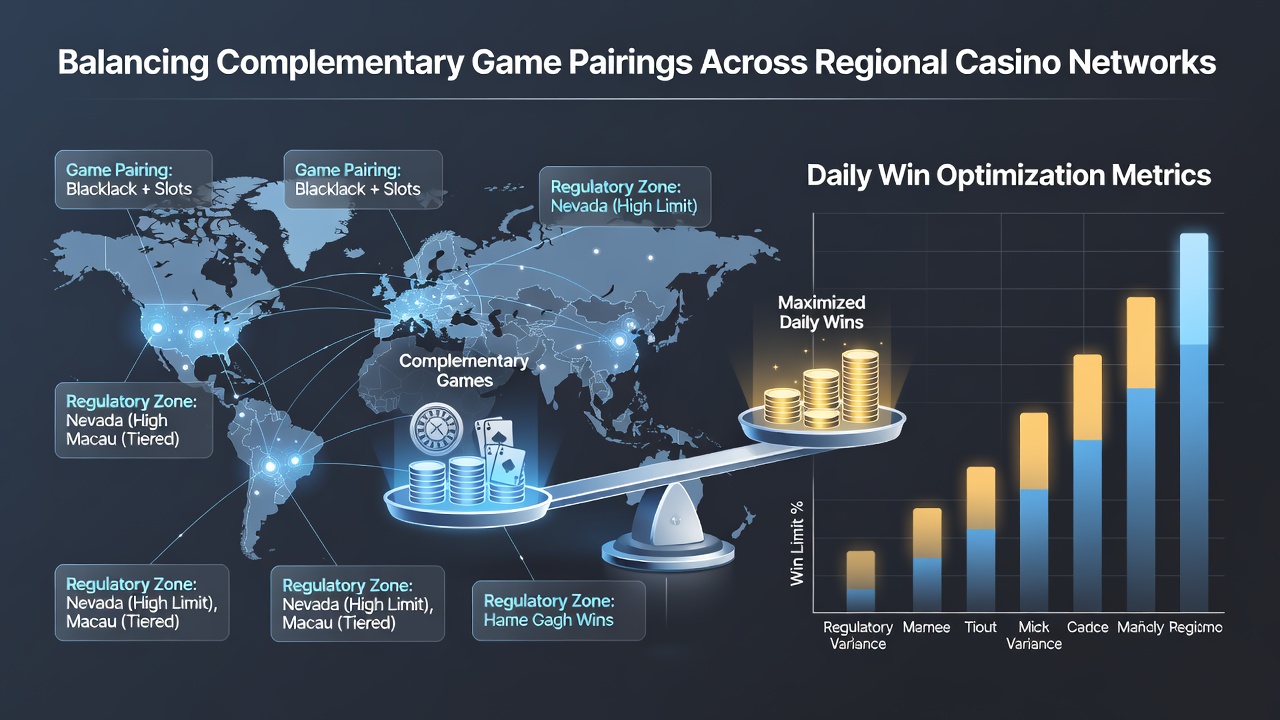
Operators manage complementary game pairings such as video poker alongside blackjack tables and linked progressive slots with keno terminals to stabilize daily revenue across multi-state casino networks, and these pairings help align with daily win limits imposed by different regulatory bodies. Data from the American Gaming Association shows how networks in Nevada and New Jersey coordinate machine placement with table minimum adjustments to stay within state-mandated thresholds while maintaining player flow through adjacent venues.
Core Elements of Game Pairing Strategies
Regional networks pair low-variance games like certain video poker variants with higher-variance slot banks to smooth out revenue spikes, and this approach allows operators to approach daily win caps without exceeding them in any single jurisdiction. Observers note that pairing occurs through centralized software systems that monitor real-time performance metrics across properties, while regulatory frameworks in each state dictate how much total win a network can report per operating day.
Those who track these systems find that complementary pairings often involve synchronizing session lengths between table games and electronic terminals so loyalty points accrue evenly, and the result supports steady movement toward daily limits set by oversight agencies. In July 2026 several networks updated their pairing algorithms after new reporting rules took effect in multiple states, which required more granular tracking of cross-game contributions to overall win figures.
Regulatory Differences Across Jurisdictions
Frameworks vary sharply between states, with Nevada maintaining one set of daily reporting requirements while Pennsylvania and Michigan apply separate caps tied to local tax structures, and operators must adjust pairings accordingly to avoid breaching any single limit. Researchers at the Ontario Lottery and Gaming Corporation documented similar coordination challenges in cross-province networks where Canadian rules intersect with U.S. border properties.
Networks operating under multiple frameworks use dynamic allocation models that shift game emphasis based on which jurisdiction's daily limit sits closest to capacity, and this method keeps aggregate revenue optimized without triggering additional compliance reviews. Figures from mid-2026 indicate that networks employing these models reported fewer limit exceedances compared with those relying on static pairings.

Implementation Across Network Properties
Implementation starts with mapping each property's current win trajectory against its regulatory cap, after which central teams select complementary pairings that offset projected shortfalls in one location with controlled gains in another. This process incorporates real-time feeds from slot management systems and table game tracking software, allowing adjustments before daily limits become binding constraints.
Examples include routing players from high-limit blackjack pits into adjacent slot banks with calibrated payout percentages, and these transitions help distribute daily win accumulation more evenly across the network footprint. In July 2026 several operators expanded these routing protocols after regulatory updates required clearer documentation of how pairings contribute to jurisdiction-specific caps.
Monitoring and Adjustment Mechanisms
Continuous monitoring relies on dashboards that aggregate win data by game type and regulatory zone, and teams review these dashboards multiple times per shift to decide whether additional pairings or de-emphasized sections are needed. When one jurisdiction approaches its daily ceiling faster than others, operators can redirect promotional offers toward properties still below their caps.
Adjustment cycles shorten during peak periods such as holiday weekends, when networks accelerate pairing changes to capture revenue without breaching any single framework's rules. Reports compiled through 2026 show that networks using automated alerts tied to these cycles maintained higher overall utilization rates while remaining compliant.
Conclusion
Balancing complementary game pairings across regional networks requires precise coordination between operational teams and regulatory reporting systems, and the methods described above enable operators to approach daily win limits consistently under varying state and provincial rules. Continued refinement of these approaches will likely incorporate new data streams as frameworks evolve in coming reporting periods.